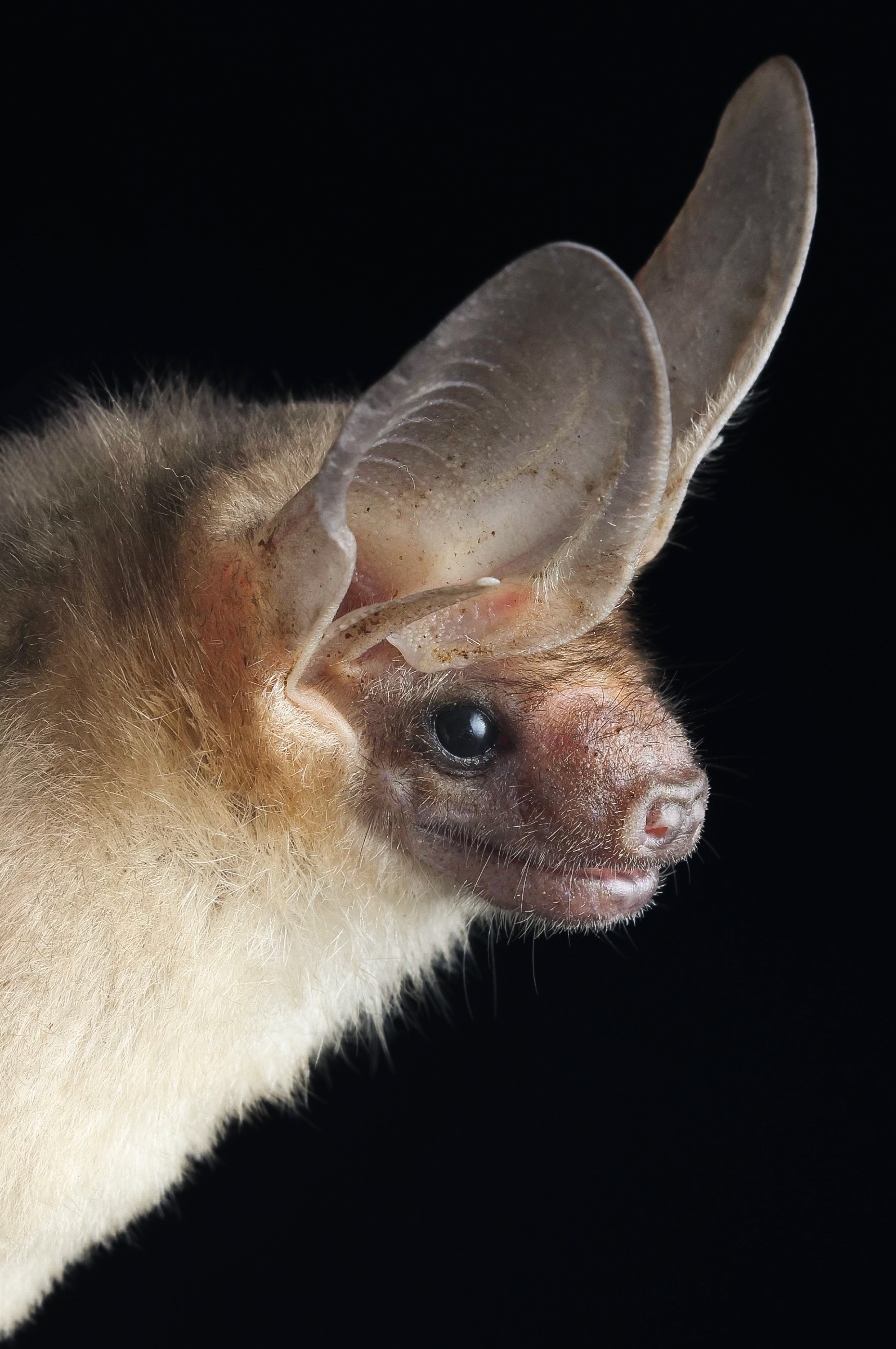
The federal government has crowned a bat named Ryan GosWING, and for once I have absolutely no objection to the election results being discussed in my kitchen. Ryan has giant ears, excellent cheekbones, and a name that suggests he should be standing dramatically in the rain outside somebody's house. Instead, he's a pallid bat from southwestern Oregon who just won the Bureau of Land Management's 2026 Bat Beauty Contest.
When I first saw the announcement, I did what any responsible local journalist would do: laughed at the name, looked at the picture twice, and emailed the people running the contest. Because I had questions. Was Ryan an actual bat who had been photographed in Oregon, or was the name attached to an anonymous candidate like some extremely furry campaign mascot? And was there more to his story than being outrageously photogenic?
First, yes. Ryan is a real Oregon bat.
Sarah Bennett, communications lead for the Bureau of Land Management's Oregon/Washington office, confirmed that Ryan is one photographed individual pallid bat. Wildlife biologist Emma Busk took his original photograph in southwestern Oregon, within BLM's Medford District. Bennett sent PNW Passport the original image and explicitly confirmed its availability for our organic website and social reporting, with Busk credited. So the ears are real. The bat is real. The very unfortunate celebrity pun is real.
BLM announced Ryan's win on November 2, after voting ended on Halloween. He beat a competing bat called Batty White, which is a spectacular amount of personality for a contest conducted mostly by people who work around public lands. The agency counted more than 3,300 votes across all the bats in the contest, not 3,300 votes for Ryan alone. That's an important distinction when you're discussing the electoral mandate of a small nocturnal mammal.
The contest is part of Bat Week, an annual late-October effort that introduces people to species many of us have never seen except as a blurry shape at dusk. In recent years Oregon has become particularly good at cheering on its candidates. But as I read Bennett's explanation, I began to suspect the ears were not merely a winning accessory.
Those ears aren't for decoration. They're a bug radar system.
Most of us picture bats flying through the air, collecting mosquitoes as if they were working a very unusual shift at the insect recycling center. Some species really do catch flying insects on the wing. Pallid bats often operate differently. Bennett explained that Ryan and his relatives listen for prey scuttling along the ground, then land and eat it. Imagine hearing a cricket take one tiny step in the dark and knowing precisely where dinner is.
And we're not talking about a dainty mosquito appetizer. Pallid bats go after crickets, beetles, centipedes, and even scorpions. My relationship with scorpions is to live somewhere that makes accidental meetings unlikely. Ryan's relationship is to hear one moving, descend from the sky, and have a snack. We are not the same.
Those oversized ears help detect the soft rustle and footsteps of ground insects. Echolocation still matters to bats, but these hunters also use exceptionally sensitive hearing to locate prey without needing to chase it through the air. Once you understand that, the official portrait changes. You're not just looking at an adorable little creature. You're looking at a specialized nighttime predator equipped to read a landscape through sound.
Oregon's bats deserve more than one week of applause.
Bennett also told us that Oregon is home to fifteen species of bats. They use different habitats, from moist Coast Range forests to dry eastern landscapes, and they fill roles that are easy to overlook when you're afraid of something that flies at dusk. Some eat insects. Some pallid bats in other habitats also visit flowers and contribute to pollination. Across the West, bats belong in the larger story of how an ecosystem feeds, grows, and stays in balance.
BLM's public advice is refreshingly practical. Plant native flowering plants where appropriate. Reduce unnecessary pesticide use. Keep noise low around known roosting areas. And do not disturb resting bats to get a closer look or a photograph. There is a difference between appreciating wildlife and turning somebody's bedroom into a public meet-and-greet. Ryan has already done the publicity circuit.
If you encounter a bat on the ground or in distress, don't touch it. Contact the appropriate wildlife professional or local public-health authority for guidance. We're talking about wildlife, not a dog-friendly celebrity appearance. A good Bat Week story should leave people curious, but also a little more respectful of the animals.
The beautiful part of an extremely silly contest
I love that BLM used a ridiculous name to get people to learn about an animal they might otherwise avoid. Somebody votes for Ryan because he's handsome. Then they learn he can hear a scorpion walking through the desert. Then maybe they reconsider the next bat they see darting across the evening sky. The joke opens a door, and real science walks through it.
Ryan won the 2026 competition. That particular ballot is closed, so there is no live voting link to send you to. What you can do is learn about pallid bats, follow BLM's public wildlife education, and help protect the quiet, dark places bats need. The Bureau's original contest report and Bat Week advice are linked below.
Sources: Direct November 3, 2026 correspondence with Sarah P. Bennett, BLM Oregon/Washington; Bureau of Land Management, 'Ryan GosWING Wins BLM's 2026 Bat Beauty Contest,' November 2, 2026: BLM's official Ryan GosWING contest report ; BLM Bat Week: BLM Bat Week . Original Ryan photograph: Emma Busk / Bureau of Land Management Oregon/Washington, supplied with express permission for editorial website and social use.
What species is Ryan GosWING?
Ryan is a pallid bat photographed in southwestern Oregon's BLM Medford District. Pallid bats listen for insects and other prey moving on the ground, including crickets, beetles and centipedes. Yes, the ears really are the main event.