The first thing Yurok Fisheries Director Barry McCovey mentioned about the Klamath River wasn't the number of salmon. It was the color of the water. He told PNW Passport that even in a summer with very little snowpack, the river stayed clear. Before the dams came down, he remembered late summers when it could turn a murky, pea-green color from toxic algae and remain that way until the big rains. The difference is something a person standing beside the river can actually see.
I had been looking at the numbers. A new scientific study counted thousands of Chinook moving into reaches that had been blocked for generations, and the figures were extraordinary enough to fill a headline. But when McCovey's answers arrived, I kept coming back to that clear summer water. There's a difference between data telling you a river is changing and somebody who has watched the river for years explaining what that change looks like on an ordinary day.
Four dams were removed from the Klamath in 2024, reopening a huge network of river and tributary habitat across southern Oregon and northern California. It became the largest completed dam-removal project of its time. But the work didn't begin in 2024. Tribes, fisheries staff, scientists, community members and advocates spent decades challenging the damage done to the basin and pushing for reconnection. It is important to tell the story with those people in it, not as though the river got fixed the moment a construction crew finished a job.
Fish didn't wait for our expectations
A study published in Scientific Reports in August 2026 used high-resolution sonar to estimate Chinook salmon traveling through newly accessible river sections during the first two migratory seasons after removal. Researchers counted an estimated 7,742 adult Chinook upstream in 2024 and 13,310 in 2025. They reported Chinook recolonization across about 345 kilometers, or 214 miles, representing 88 percent of their documented historical range in the study area. These were estimates of fish passage through particular monitored reaches, not a declaration that every salmon population in the basin is healthy.
It is tempting to call this the moment the Klamath came back to life. But the river had never stopped being alive. Fish, people, wildlife and communities had kept living with its losses. What changed was access: salmon could once again swim into water they had been prevented from reaching by barriers. That shift is significant without needing to pretend it solves every problem.
McCovey said Yurok fisheries staff had long believed salmon would quickly recolonize the upper basin's spring-fed creeks once the barriers were gone. Even so, he acknowledged surprise at how far fish made it in the second year after the last dam was decommissioned. The fish didn't consult anyone's carefully prepared timeline. They found their way into the newly connected river.
The spring Chinook are the part to keep watching
There are different stories moving through the same water. Fall Chinook have already been documented using stretches that were newly accessible. Spring-run salmon are more fragile, with far smaller populations than the fish people often imagine when they hear the word 'comeback.' McCovey told us that seeing spring fish gradually begin to repopulate the upper habitat has been encouraging. His team had expected that process to take longer than the fall run.
That distinction matters. A new route is not the same thing as a stable generation of fish. Reopening habitat creates a possibility, but young salmon still need the water, temperatures, food and conditions that allow them to grow and survive. Then they have to make it back from the ocean. A few wonderful returns can be the opening chapter of recovery without guaranteeing its ending.
The 2026 research included people working across tribal, state and federal institutions. The Yurok, Karuk and Klamath Tribes have all been central to the basin's long and complicated restoration story. Any account of the fish numbers that turns those communities into background scenery misses both the history and the work still happening.
The damage didn't begin and end at the dams
When I asked McCovey where restoration remains most fragile, he didn't point to a future ribbon-cutting. He went backward in time, to the legacy of gold mining. The Klamath and major tributaries including the Trinity, Scott and Shasta Rivers were heavily damaged during that era. McCovey said the resulting impairment across long sections of river is a major issue that still has to be addressed.
I found that answer both sobering and useful. It would be easy to finish an article with the dam-removal footage, salmon arriving and a triumphant full stop. But fisheries recovery doesn't happen on a television schedule. There are riverbanks and channels to restore, places for fish to spawn, tributaries to care for, and years of monitoring before anyone can speak confidently about lasting population health. This story belongs to the people doing the work on the river's ordinary, unphotographed days, too.
One number from the study stayed with me: the researchers reported that the returning Chinook had reached elevations up to roughly 1,250 meters as they spread into reconnected reaches. That means these fish crossed former dam sites and navigated difficult passages in a landscape humans had made harder to travel. The route may be theirs again. Keeping it welcoming is our responsibility.
The place Barry McCovey hopes we'll remember
When I asked McCovey which place along the Klamath he wanted readers to know, he pointed to the area around the former J.C. Boyle Dam. He said the positive impacts of restoration are already visible there. What he wants to see now is how it looks ten years from today, after trees and other vegetation have had a chance to grow. That's a different clock from a headline. More like the river's own timeline.
The former dam site is part of a landscape still changing. It is not an invitation to wander into active restoration zones or disturb monitoring equipment, and access can vary. If you want to learn about the basin, start with tribal fisheries and restoration organizations, official river access information and the scientific work. Please don't turn a place with deep community meaning into an unofficial salmon selfie scavenger hunt.
I don't want to say the Klamath is saved. I want to say the river has new possibilities, and the people who fought to make them possible deserve to be named. I want to remember that a fisheries director, asked what changed, spoke first about clear water. And I want to remember that his hope stretches beyond the first big count, to a former dam site with growing trees and fish that continue returning.
What the data can—and can't—tell us
The 2024–25 sonar counts provide a measured early picture of recolonization, not a finished census of all salmon everywhere. The 88 percent figure refers to documented historical distribution within the research framework, not 88 percent of historic abundance restored. Scientists also documented other migratory species moving into reopened water, but sufficient abundance data were not yet available to make equally strong population estimates for them.
That is still enormous news. The Klamath has taught us something about what removing a barrier can make possible. Its future will be shaped by habitat, climate, water quality, fisheries, tribal stewardship and years of attention. A beautiful first chapter deserves a careful second one.
Original reporting: Barry McCovey, Yurok Fisheries Department Director, written answers provided to PNW Passport via Matt Mais on November 4, 2026. Published study: 'Rewilding the upper Klamath River Basin: Rapid recolonization of Chinook salmon following the world's largest dam removal,' Scientific Reports (August 27, 2026): the 2026 Scientific Reports study ; U.S. Geological Survey: the U.S. Geological Survey research record .
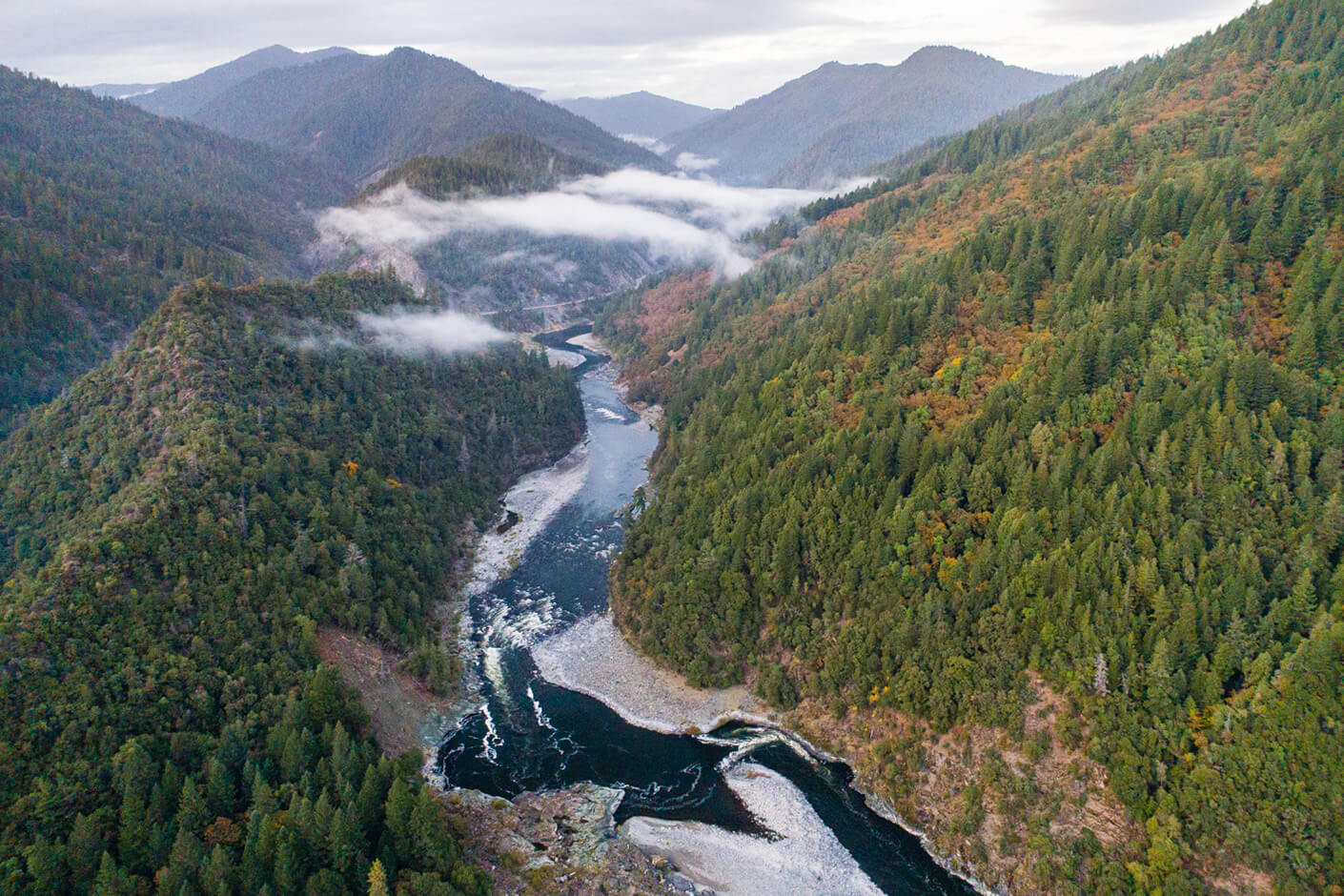
Cover: Klamath River after dam removal, NOAA Fisheries (October 2024), U.S. government public-domain photograph. This is a river landscape, not a photograph of Barry McCovey or of the returning salmon.
Did salmon return to the Klamath after dam removal?
Yes. Chinook salmon have moved into habitat long blocked by the four former dams. But rapid recolonization isn't the same as a complete return to historic salmon abundance. Yurok fisheries staff are watching promising early signs while continuing much longer restoration work.