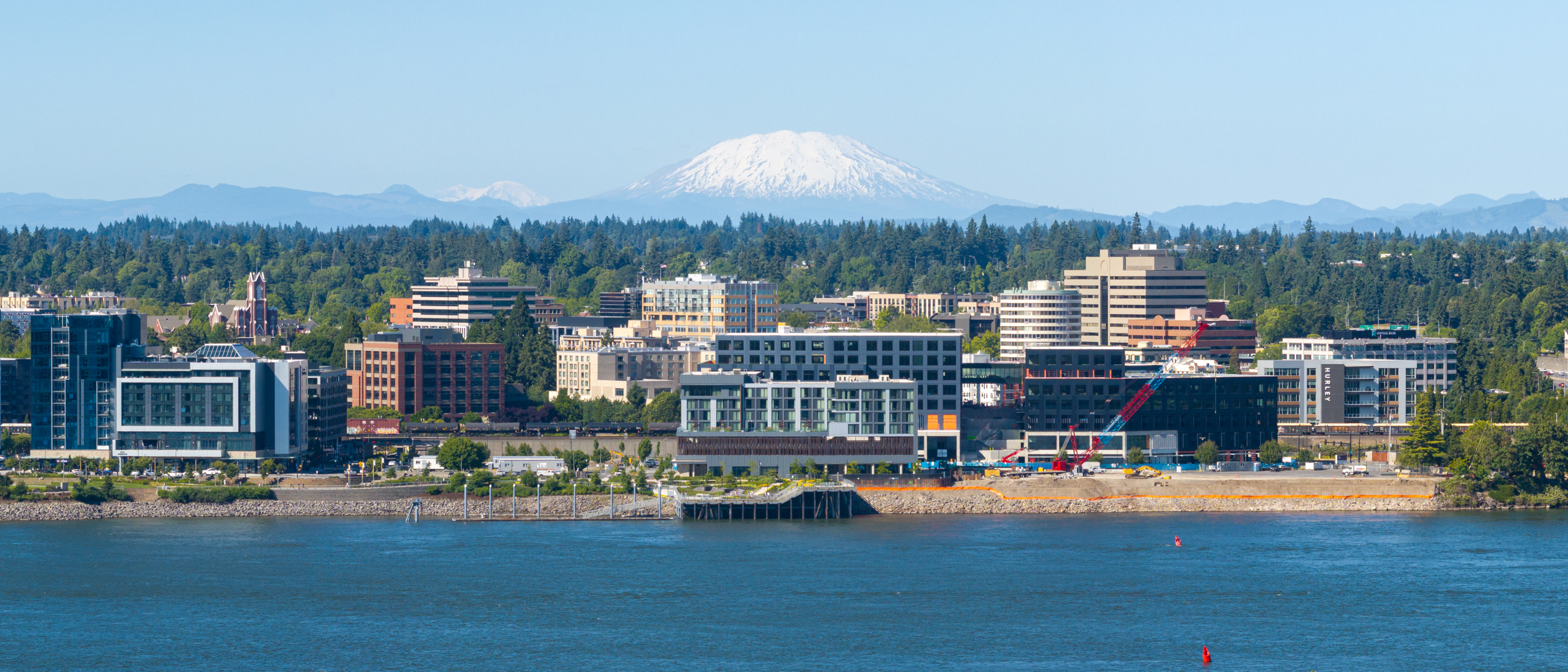
We already had two Vancouvers in the Pacific Northwest. Same name. Different countries. An impressive collective commitment to confusing people who make plans over text message. And now, beginning November 1, 2026, they have different clocks, too. I would like to file a small complaint with whoever manages the regional calendar.
At the same instant that it's 9 a.m. in Vancouver, Washington, it's 10 a.m. in Vancouver, British Columbia. Nobody has moved. The Columbia River hasn't changed course. The Canadian border hasn't developed a strange new bend. British Columbia decided to stop changing its clocks twice a year, and Washington didn't follow it.
This might sound like a fun fact for exactly three people who collect time-zone maps. But there are people crossing that border to work, visit family, book trains, take flights, and join meetings. Suddenly, 'see you at nine' needs a second sentence. Which nine? Whose nine? Why are we living like this?
Here's what happened on November 1.
Washington and Oregon returned to Pacific Standard Time, UTC minus eight hours, when daylight saving time ended. Most of British Columbia, including Vancouver, did not move its clocks back. Instead, the province is continuing on its newly adopted permanent Pacific Time, UTC minus seven hours. This is the same hour Washington and Oregon use during summer daylight time, but B.C. now keeps it through the winter.
So Vancouver, Washington is one hour behind Vancouver, B.C. from November 1 through the winter. It's not a permanent one-hour gap. When Washington and Oregon spring forward again in March 2027, their clocks line up with Vancouver, B.C. once more. The province remains on its fixed clock; the U.S. states do the seasonal gymnastics.
A note for geography enthusiasts who are already opening their keyboards: British Columbia has regional time-zone exceptions outside the Pacific area. This story is specifically about Vancouver, B.C. and the communities sharing that clock, not a claim that every address in the entire province operates identically.
The train trip that apparently takes five hours north and three hours south
The strangest practical illustration comes from Amtrak Cascades. The Washington State Department of Transportation warned travelers in an October 28 advisory that tickets between Seattle and Vancouver, B.C. might show a five-hour trip northbound and a three-hour trip southbound during the winter. Did the train gain some kind of cross-border time machine? Sadly, no. The actual trip remains about four hours in either direction.
A train leaving Seattle at one local time is arriving in a city whose clock has been set an hour ahead. It looks longer northbound. The return journey looks shorter because the arrival clock is an hour behind. The tracks, train speed and distance have not changed. Only the numbers printed on the itinerary have begun behaving theatrically.
WSDOT says tickets use the departure city's local time and the arrival city's local time, and travelers will hear onboard reminders about the change as they cross the border. This is not the place to assume your phone's calendar is translating everything perfectly. Check your departure and arrival stations, their cities, and the time zone shown.
The useful part: meetings, family visits and travel
If somebody in Vancouver, B.C. invites you to a video meeting at 10 a.m. their time, put it on your Washington calendar for 9 a.m. If your relative in Vancouver, Washington says dinner is at six, the B.C. clock is showing seven. For a Portland-to-Vancouver, B.C. trip, plan around the same winter hour difference. And if you're crossing the border on a train, bus, or flight, follow the local time printed for each station or airport.
Electronic calendars usually handle named time zones better than vague text messages. Choose the actual city or time-zone setting instead of typing an unqualified hour. If a colleague or friend is scheduling across the border, write both: '9 a.m. Vancouver, WA / 10 a.m. Vancouver, BC.' Two extra words now can save an unnecessarily dramatic phone call later.
The current gap applies during the winter portion of the U.S. clock cycle, not every month. If you're reading this story next spring or next fall, check the governments' current schedules. Time policy is one of those topics that can change while your old screenshot continues circulating as though nothing happened.
Which time would you choose?
The debate underneath this split is bigger than a funny map. Permanent daylight time keeps more light into the evening during winter, but pushes winter sunrise later. Standard time shifts the available daylight toward morning. Sleep researchers have argued for permanent standard time on health grounds; others prefer the brighter-feeling after-work hours. Different people feel those trade-offs differently, especially if they start work, commute or take children to school before the sun is up.
I think the interesting question isn't which Vancouver wins a hypothetical trophy. It's what we want daylight to do for our actual lives. We can agree the sun isn't taking public comment, and still disagree about which hour we would rather have it. Meanwhile, if you're meeting somebody named Vancouver in a city named Vancouver, please specify a country and a clock. One shared name apparently wasn't complicated enough.
Sources: Government of British Columbia, 2026 Pacific Time announcement: https://news.gov.bc.ca/releases/2026CITZ0009-001073 ; Washington State Department of Transportation, 'Amtrak Cascades: Please note daylight savings time differences when traveling to and from Canada,' October 28, 2026: https://wsdot.wa.gov/about/news/2026/amtrak-cascades-please-note-daylight-savings-time-differences-when-traveling-and-canada . Examples compare Vancouver, Washington and Vancouver, B.C. during the winter clock difference beginning November 1, 2026.
Cover: Vancouver, Washington aerial photograph (June 2024), Spicypepper999 / Wikimedia Commons, CC0. Image depicts Vancouver, Washington—not Vancouver, British Columbia.
Sources and photography credits are detailed above and within the reporting.
Is Vancouver, BC one hour ahead of Vancouver, Washington?
During the U.S. winter clock period beginning November 1, 2026, yes: 9 a.m. in Vancouver, Washington is 10 a.m. in Vancouver, British Columbia. Check schedules carefully for cross-border trains and travel. That difference doesn't apply year-round.
The story doesn't end when I hit publish.
Every Monday I send a letter about what our little Northwest newsroom uncovered, the people I can't stop thinking about, and my TOP FIVE things to do that week. It's free, and I'd love to have you along.
Love, Larie ❤️