I thought I was reporting a grocery-price story.
Then Bryan Vance answered my email and accidentally made himself the story.
I had reached out because Stumptown Savings kept appearing in my orbit whenever Portland groceries got expensive enough to feel personal. Bryan tracks deals across more than twenty stores. He builds a public price database. He tells people when blueberries are cheap enough to freeze, when WinCo is worth the drive, and when you are about to waste forty minutes of your life saving seventy-three cents on ketchup.
What I did not understand was how much of his actual week disappears into making that information look easy.
THE SPREADSHEET HAS A PROTAGONIST
Every Tuesday, Bryan goes to WinCo and walks the aisles because it is the one major store in his weekly guide that does not simply hand him a clean digital list of upcoming deals.
Then he goes home and keeps going.
Safeway ads. Fred Meyer. New Seasons. Trader Joe’s. PDFs. Store apps. Costco’s famously graceful digital experience, which is a sentence I am typing sarcastically. Suggested recipes. Seasonal produce. Local events. All of it gets filtered into his Thursday guide.
His estimate for one weekly deals edition: twelve to fourteen hours.
And that is the lighter week.
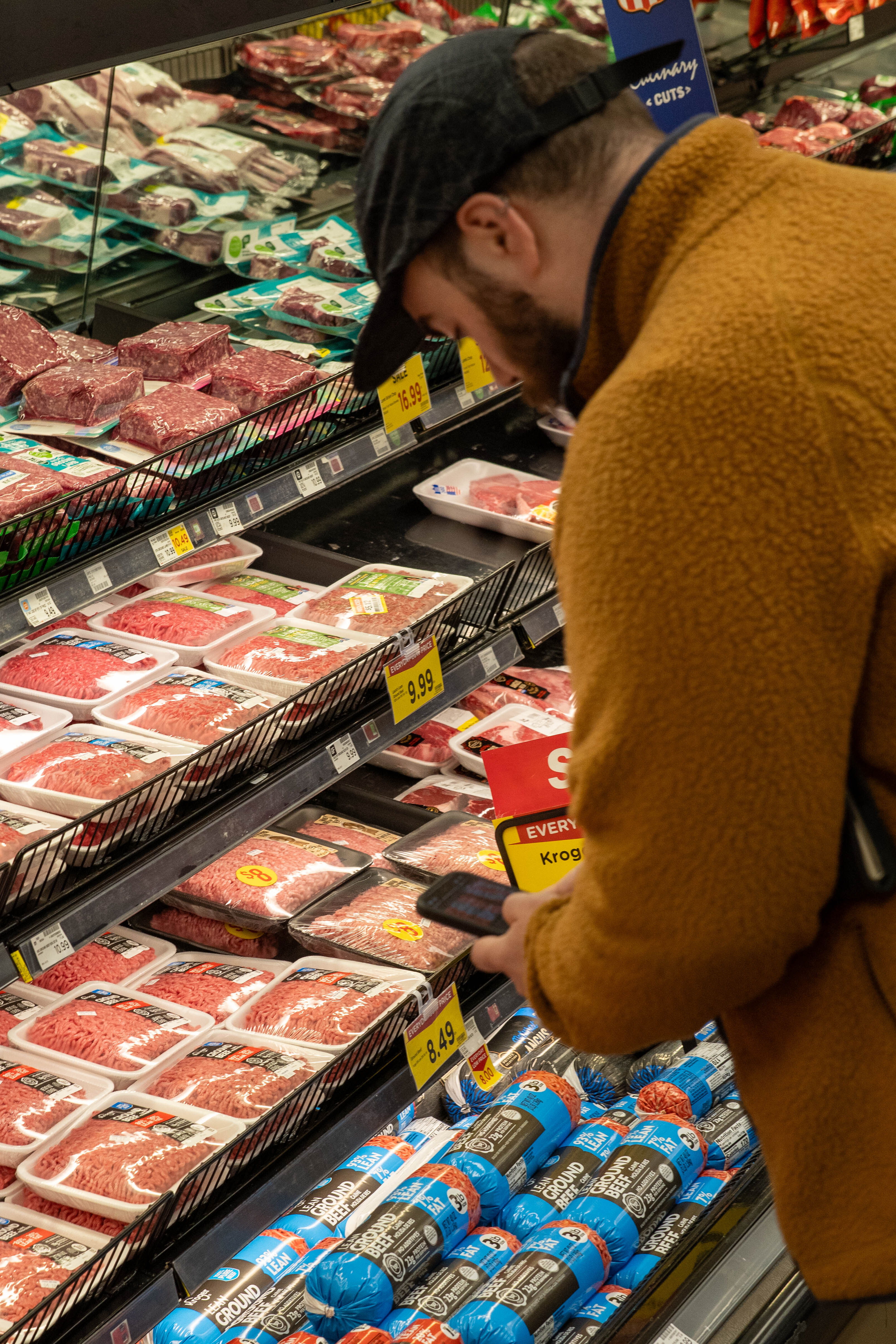
Photo: Branden Andersen / Newsberg.
ONCE A MONTH, HE BASICALLY AUDITS PORTLAND’S GROCERY AISLES
The Portland Price Tracker is a separate beast.
Bryan starts by rebuilding the spreadsheet he uses to track his regular basket. Stores that guarantee online pickup prices match the shelf can be checked from home. Then he leaves the laptop and starts driving.
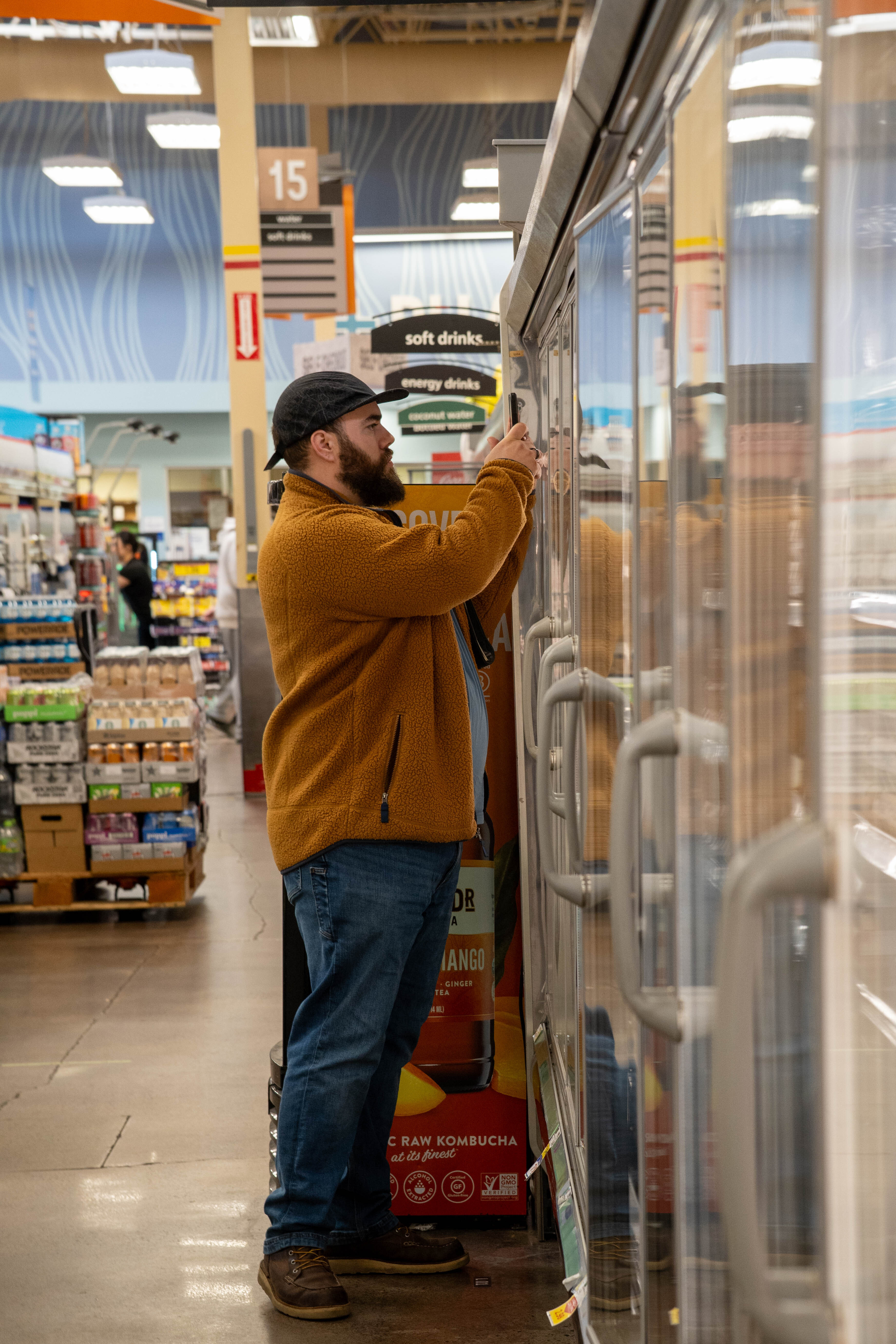
He begins at WinCo in East Portland and works his way west, eventually crossing the river toward Zupan’s. If a label is confusing or the packaging looks suspiciously different, he photographs it so he can check his own work later.
The collecting alone takes about eight hours.
Then comes another workday of cleaning the data, reviewing oddities, fixing mistakes and analyzing more than 5,000 price points before the public database gets updated.
At some point while reading his answer, I stopped thinking, wow, this is useful, and started thinking, Bryan, are you okay?
THIS STARTED BECAUSE HE REALIZED HE WAS OVERPAYING BY ABOUT 20%
Bryan moved to Portland from South Carolina more than a decade ago for a job at OPB. He landed in Sellwood with two walkable grocery options: New Seasons and QFC.
New Seasons was outside his budget, so QFC became the default. It felt familiar. Bryan grew up in Ohio, Kroger country, and the brands looked like home.
Then he started making occasional trips to Fred Meyer and noticed the prices were not behaving the way familiarity had taught him they should.
So he made a spreadsheet.
Basmati rice. Canned beans. Roma tomatoes. The boring things that quietly eat your money because nobody is posting a cinematic Reel about the emotional journey of a can of chickpeas.
Over a few months he compared those same products across QFC, Fred Meyer, Safeway, New Seasons, WinCo and other stores.
His conclusion: on identical items, he was paying roughly twenty percent more at QFC.
He stopped treating convenience like a neutral choice.
THE BIGGEST MISTAKE, ACCORDING TO THE GUY WHO HAS THE RECEIPTS
“Shopping the SAME store for everything is usually the biggest mistake.” — Bryan Vance
That does not mean you need to build a twelve-stop grocery pilgrimage every Sunday.
Bryan is much more practical than that. We all have work, kids, traffic, bad knees, limited time and a finite number of emotional resources available for the cereal aisle.
His point is that automatic loyalty can get expensive.
If you always shop one store because you always shop one store, you stop seeing when the same basics are dramatically cheaper somewhere else.
Shelf-stable food is his favorite example. Beans. Rice. Grains. Condiments. Bulk-bin staples. He would rather see someone make an occasional WinCo run and load up than pay a neighborhood premium every single week.
WHEN IS THE SECOND STOP WORTH IT?
This was the question I cared about because I refuse to become a person who burns three dollars in gas to feel victorious about a forty-cent discount.
Bryan’s rule is beautifully normal: do not make a special trip for one cheap thing.
One steak? No. One pound of apples? Probably not. A bottle of ketchup? Please go home.
The math starts working when you can either buy a useful quantity of one item or stack several things you actually need.
His blueberry example is perfect. Once a year, Safeway runs a local-blueberry sale strong enough that he makes the extra stop, buys the maximum and freezes enough to last.
Proteins can work the same way because meat freezes well. A strong sale at New Seasons may justify a separate stop if you are buying enough to make the detour count.
But if the second store is more than five or ten minutes out of your way, Bryan wants you to make that trip earn its keep.
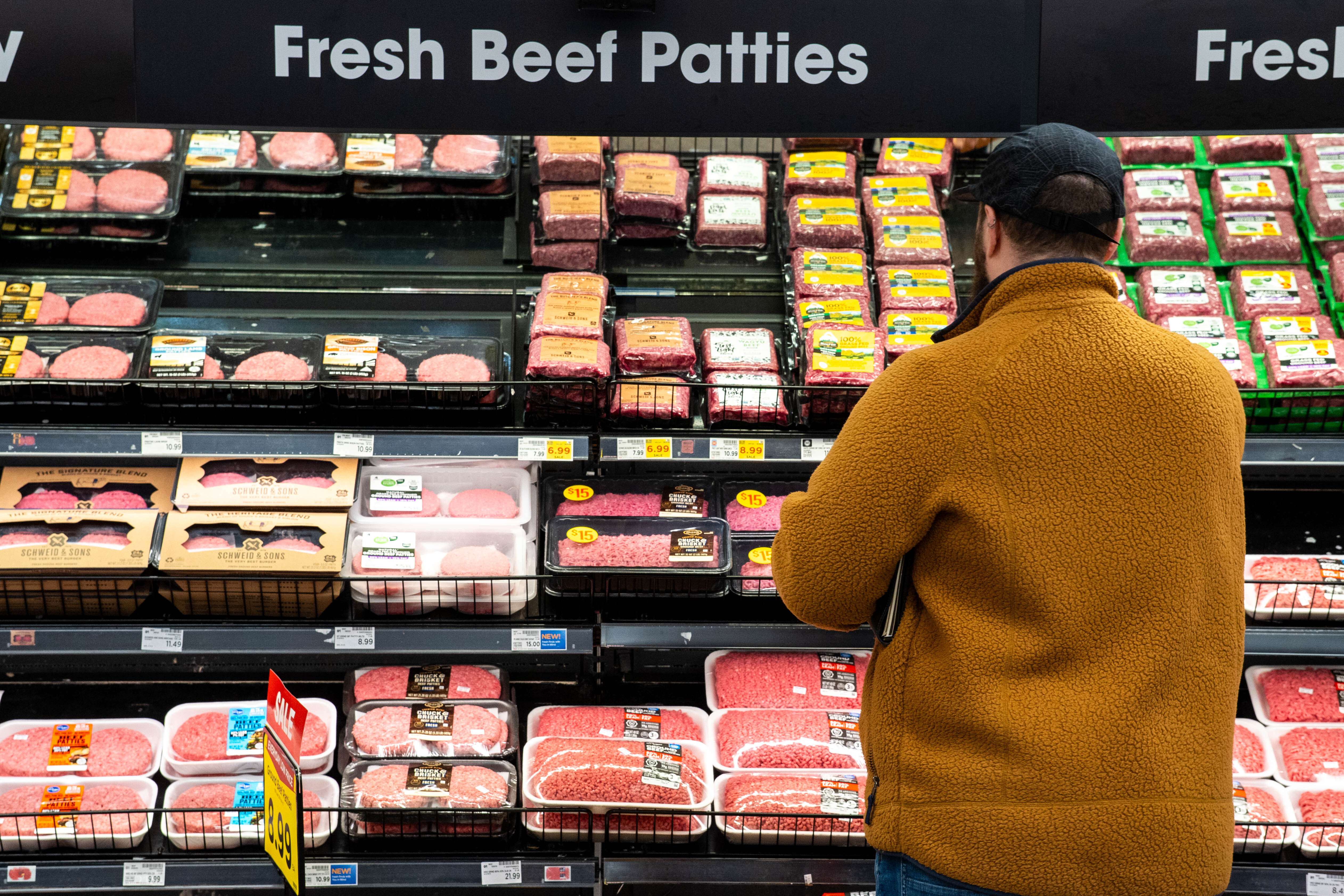
Photo: Branden Andersen / Newsberg.
SEASONAL EATING IS NOT JUST FARMERS-MARKET POETRY
It can also make your grocery bill less rude.
Bryan watches produce cycles because stores discount what is abundant. That means the strawberries your heart wants every week of the year may not be the smartest hill to die on in February.
Buying produce when it is in season can lower your cost and often improve what ends up on the plate.
This is where his years on the Montavilla Farmers Market board show up. He did not just learn prices. He learned more about how local food moves, how small farms get squeezed and why “cheap” is not always a simple number.
HOW TO USE STUMPTOWN SAVINGS WITHOUT BECOMING BRYAN
Please do not read all twenty-plus store sections unless spreadsheets are your love language.
Bryan does not want that for you either.
- Start with the top five deals in the Thursday guide.
- If one catches your eye, open the web version and jump to stores you already use.
- Use your browser’s Find function for specific needs or terms.
- Ignore the stores that are nowhere near you.
- Make a short list, then go live your life.
“Trying to review all of them is a full-time job, and people can leave that to me.”
That line made me laugh because he is not exaggerating.
THEN HE GOT LAID OFF
Fast-forward to April 2025.
Bryan was working as director of digital strategy for City Cast when he lost his job. At nearly the same moment, egg prices were making national news and food inflation was becoming dinner-table conversation again.
He already had the grocery obsession. He already knew how to build newsletters and digital products. He already knew Portlanders were paying wildly different prices for the same food.
So he turned the spreadsheet outward.
Stumptown Savings was born.
THE PART THAT MADE ME CARE ABOUT HIM, NOT JUST THE DATABASE
Bryan told me he is still not making anything close to a normal salary from this work.
“I’m not even close to making minimum wage yet.”
He knows he could probably earn more working for somebody else.
He also knows thousands of people now open what he makes because groceries are one of those expenses you cannot simply opt out of for a month.
Every week, people tell him they saved money. Or found a producer. Or discovered a program. Or finally understood why a price moved.
That is what keeps him going.
And that is where the story changed for me.
I opened his work because I wanted to know which grocery store was cheapest.
I left thinking about the person who decided the answer should be public.
Bryan built a spreadsheet because Portland groceries pissed him off. Somewhere along the way, it became a piece of local infrastructure.
That feels very Portland to me.
Last verified with Bryan Vance in September 2026. Grocery prices and weekly deals change constantly; use Stumptown Savings for current listings rather than treating examples here as live prices.
Sources: Bryan Vance direct interview with PNW Passport; Stumptown Savings current site and Portland Price Tracker. Photos by Branden Andersen / Newsberg, supplied with permission.