Portland has trained me to look down.
Not emotionally. I am doing fine.
I mean literally.
Because every time I think I understand this city, somebody points at a curb and says something like, “That used to be horse parking,” and suddenly I am standing on the sidewalk having another identity crisis about how little I notice.
Those metal rings embedded in old Portland curbs are exactly what they look like once somebody tells you: places to tie a horse.
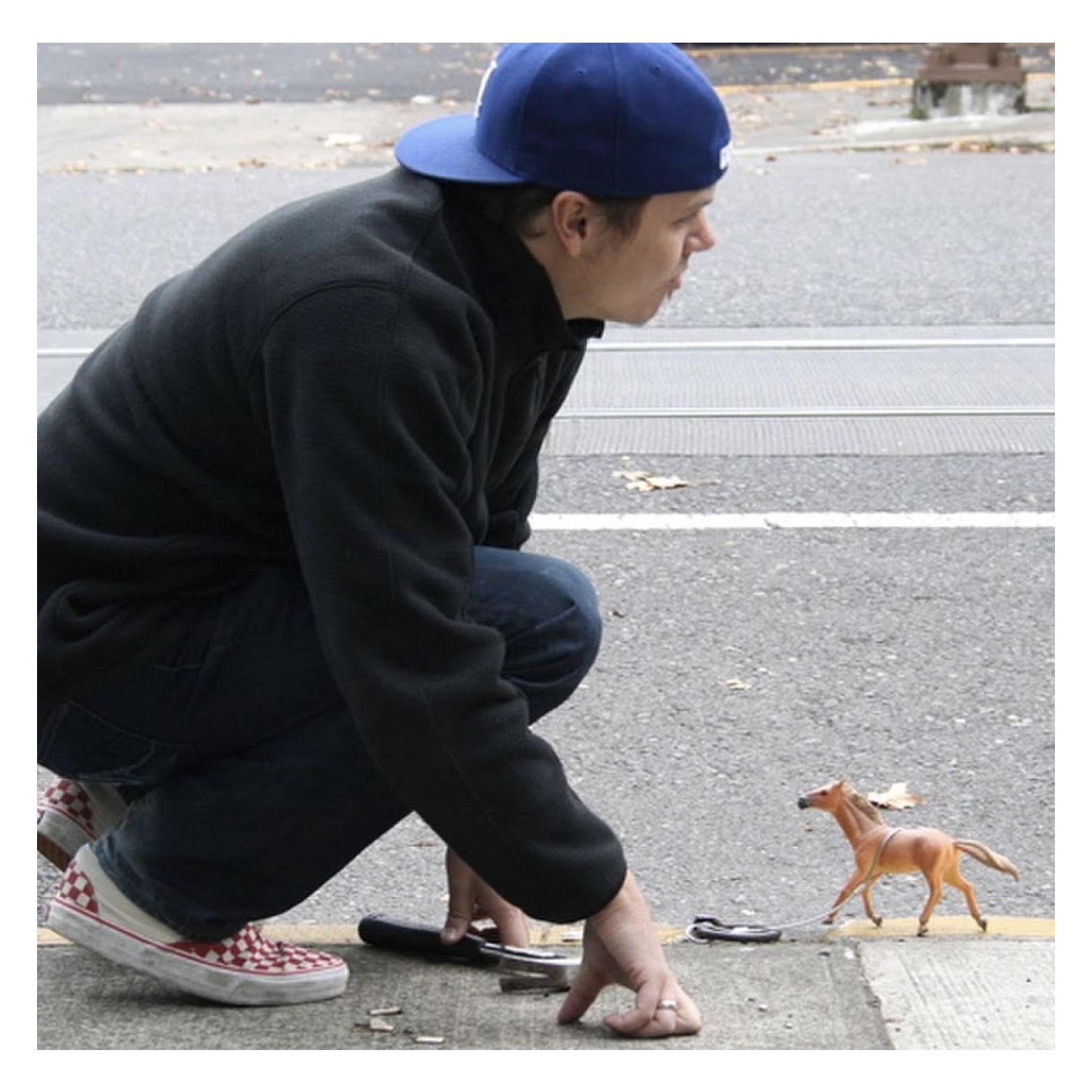
And because Portland cannot leave a perfectly good piece of obsolete infrastructure alone, people started tying tiny plastic horses to them.
SCOTT WAYNE INDIANA STARTED IT IN 2005
Artist Scott Wayne Indiana told PNW Passport he began the Portland Horse Project in 2005.
He tethered toy horses to the old rings around town.
At first, it was his project.
Then the city stole it in the nicest possible way.
“After a few years of tethering horses all over town and the project getting press, it took on a life of its own and the people of the city have carried it forward as a Portland staple.” — Scott Wayne Indiana
That sentence is the whole reason I love this story.
A good public-art idea does not always need to stay owned.
Sometimes it gets better when strangers start participating without asking permission from anybody except the tiny horse.
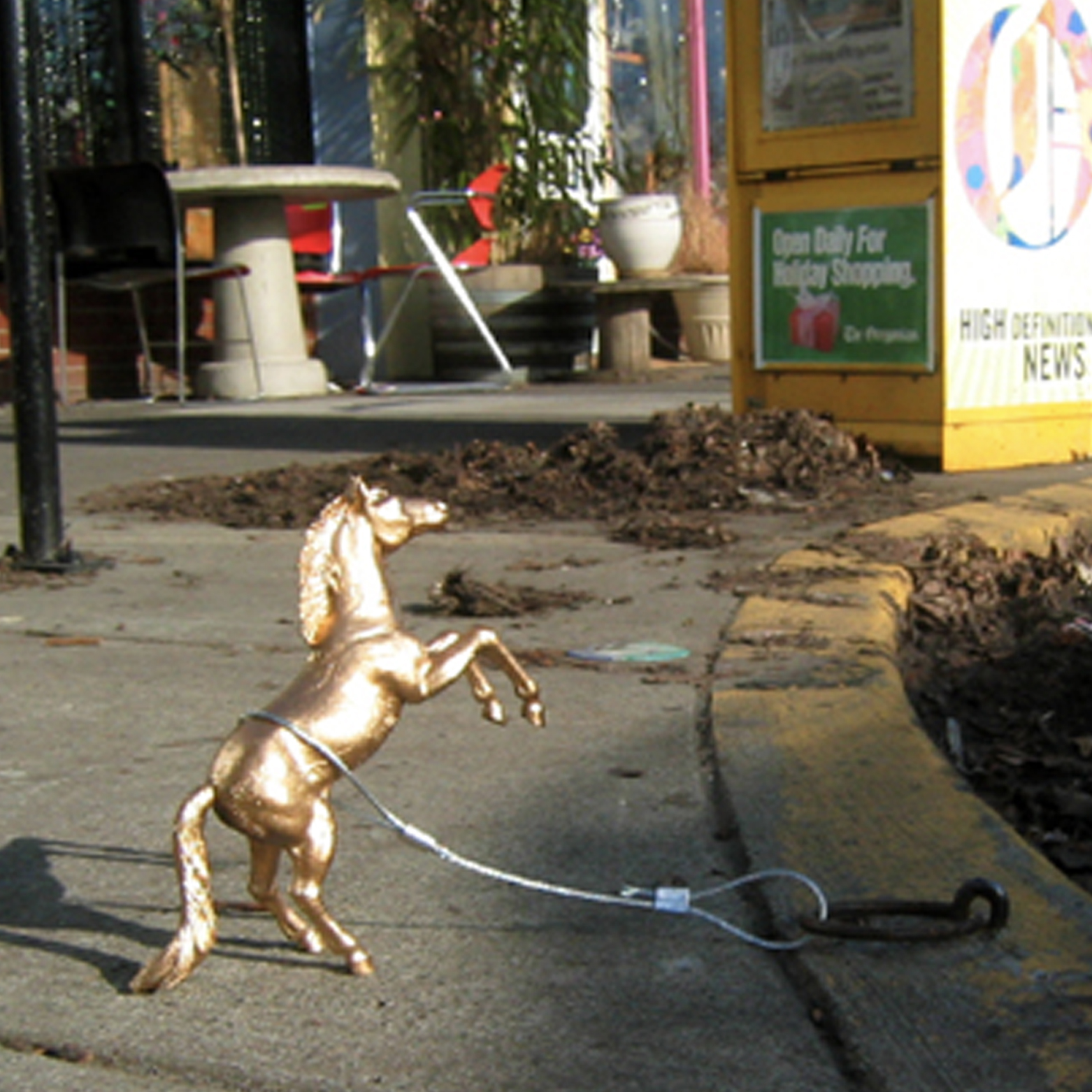
Photo: Scott Wayne Indiana.
PEOPLE NOW PLAN THEIR VISITS AROUND THE HORSES
Scott still hears from tourists asking where they can find rings.
People have built birthday outings around them.
Others add their own horses and leave the next person something to discover.
A joke that began with one artist quietly tethering toys to curbs became one of those Portland things nobody officially runs anymore but everybody somehow understands.
That is civic culture in its most charming form: no ticket, no ribbon cutting, no app.
WHERE TO LOOK
- Near the NW corner of Powell’s Books by the back entrance.
- In front of the Bagdad Theater on Hawthorne.
- Along NW 23rd toward the farther Alphabet District blocks.
- SE 28th south of Burnside.
- Woodstock near the True Value and Delta Cafe area.
Those are places Scott personally mentioned, not a promise that a specific toy horse will still be waiting there.
The horses disappear. They weather. Somebody moves one. Somebody adds another.
The ring is the history.
The horse is the conversation happening on top of it.
THE PART I KEEP THINKING ABOUT
A metal loop in a curb is almost nothing.
Without context, it is city debris.
With context, it is transportation history.
Add a three-inch plastic horse and suddenly a child notices it, then a tourist, then a grown adult crouching on the sidewalk with a phone while another grown adult asks why they are photographing a toy pony.
History became visible because somebody made it funny.
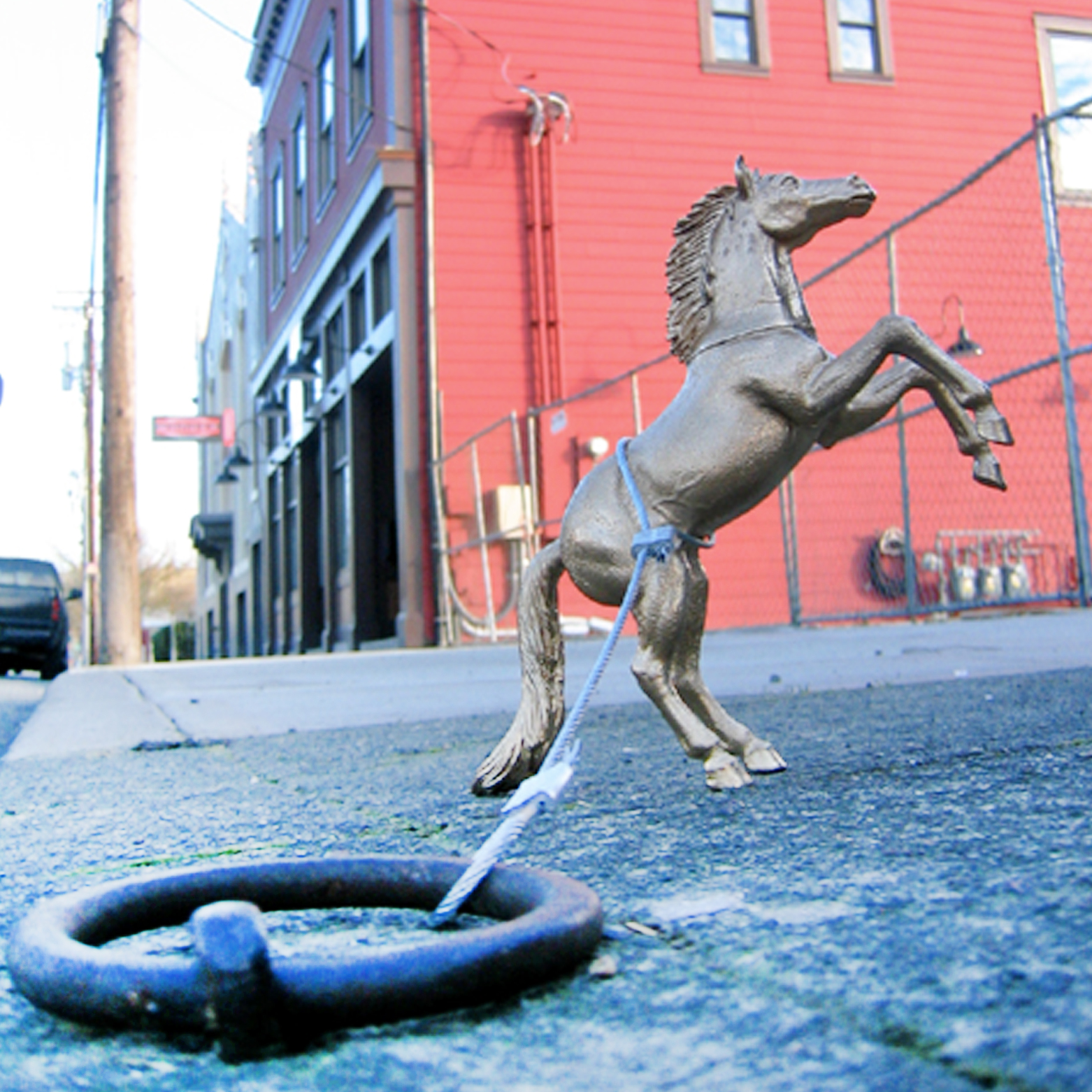
Photo: Scott Wayne Indiana.
SCOTT’S ACTUAL POINT WAS NOT THE HORSE
He told me the project was about whimsy, yes, but also awareness.
“When we keep our eyes open, there’s a lot of great things to experience.”
That line landed harder than I expected from a story involving plastic horses.
Because that is the whole game, really.
The city is not hiding everything from us.
Half the time we are just moving too fast to see it.
ONE PHOTO RULE FROM THE MAN WHO STARTED IT
Scott gave us one wonderfully specific instruction for photographing the project: include the ring.
Do not zoom so tightly on the toy that you erase the reason it is funny.
You need the little horse and the old hardware in the same frame.
Past and present need to touch.
Otherwise it is just a toy on concrete.
CAN YOU ADD ONE?
The project survives because people participate.
If you do, use common sense. Do not damage the ring, block the sidewalk, take somebody else’s horse home or turn a piece of public whimsy into a nuisance.
Leave something small.
Let somebody else find it.
Then keep walking with your eyes a little more open than they were before.
That is a very good free thing to take home from Portland.
Last verified with Scott Wayne Indiana in August 2026. Individual horse locations change constantly.
Sources and photos: Scott Wayne Indiana direct interview and source-supplied images; Portland historic horse-ring preservation background.