I have a fairly generous definition of date night. Good food, interesting company, maybe somewhere with an excellent cocktail. But when I learned Portland was inviting adults to spend an evening watching scientists examine a nine-foot shark, I had one immediate question. And it wasn't what shoes to wear.
Did somebody kill a shark so people could have a weird Saturday night?
I emailed Oregon State University's Big Fish Lab because I couldn't enjoy the absurdity until I knew the answer. Carol Wolfgang, who responded on the lab's behalf, explained that the blue shark had been caught accidentally as bycatch. It had already died and was donated for research and education. Nobody killed an animal to create a spectacle. That mattered to me.
The ocean has stories we almost never get to hear
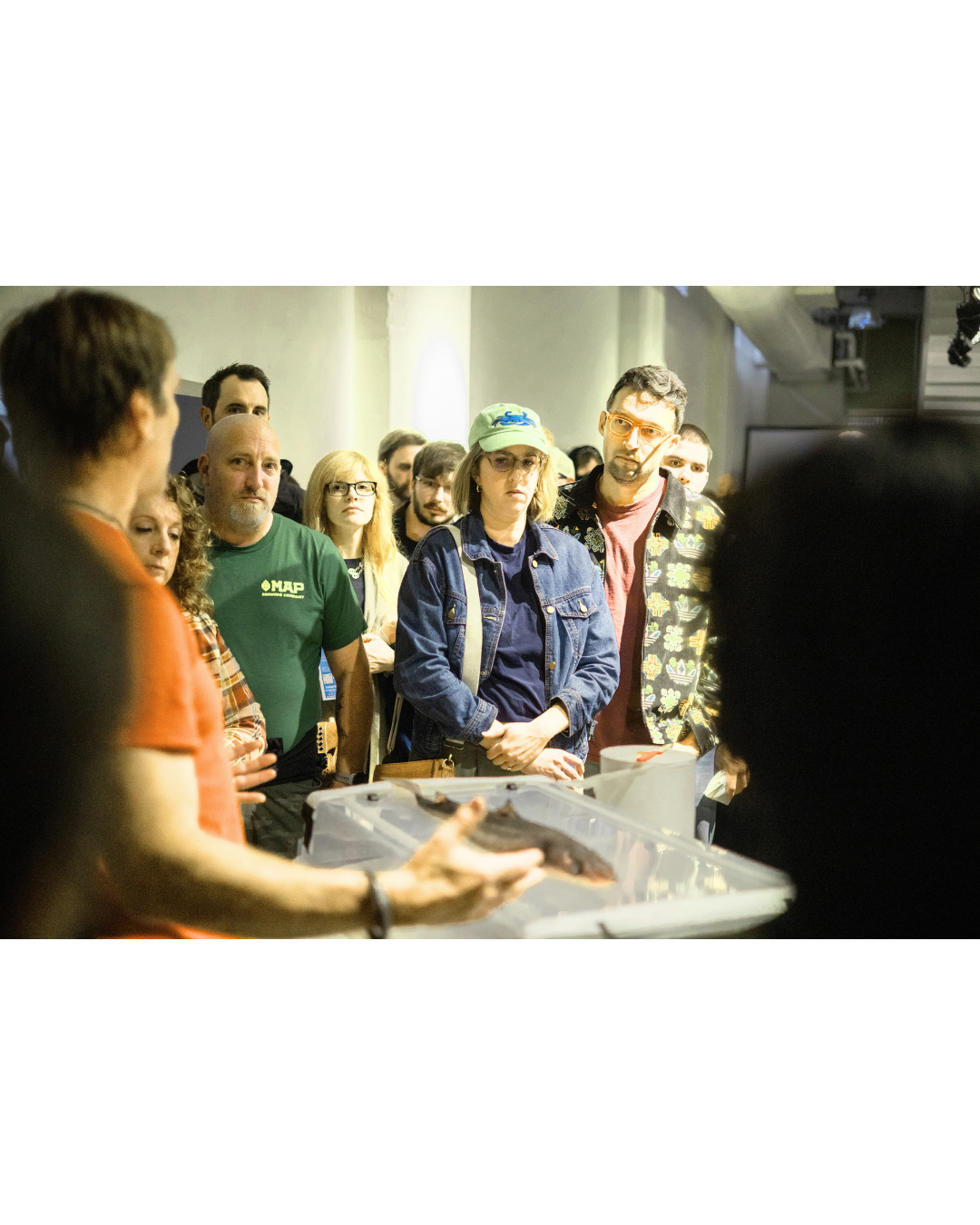
Sharktoberfest happened October 10, 2026, inside rented space at OMSI in Portland. It was organized by the Big Fish Lab, not the museum, and the centerpiece was a public necropsy—the animal version of an autopsy. Drinks were available. A dead shark was on the table. Portland, sometimes I do wonder what your dating profile would say.
But what stayed with me was Wolfgang's explanation of the work. Researchers can examine what a shark ate, take tissue samples, and look for clues about where it spent its life. Scientists learn from details most of us would never think to notice. To somebody passing by, it's a specimen. To a student, it might be another small piece in a very large, saltwater puzzle.
I grew up in Hawai‘i, so the ocean has never felt like scenery to me. It's alive, complicated, occasionally terrifying, and full of creatures going about lives we barely understand. The idea that an animal lost to an accidental catch could still teach us something made the whole evening feel less like a stunt and more like an act of attention. Growing up near the water also taught me that awe and unease can arrive together. I can be fascinated by a creature and uncomfortable watching a scientific examination. Both feelings are allowed. Curiosity doesn't cancel respect; it asks better questions.
Even the ticket had a story
When an event promises to support research, I always want to know where the money goes. Wolfgang didn't give me a dreamy brochure answer. She gave me real expenses: student tuition, housing and stipends; shark tags; boat time; and travel. The stuff that lets curious people become working scientists. Apparently research vessels do not run on enthusiasm and a beautifully written grant application alone.
Tickets for that October night were listed at $45 without alcohol and $55 with it, with a $10 discount for OMSI members. Those were 2026 prices, not a current offer. The event has passed, and a future Sharktoberfest would need a new date and ticket check.
Here's what I love about the story. A shark was lost, and a group of people refused to let that loss be the end of what it could contribute. Students learned. Strangers got curious. And a Saturday night in Portland became a conversation about animals most of us will never meet.
I went looking for a bizarre date-night story. I found people taking the ocean seriously enough to invite the rest of us into their work. Which is a much better ending than I expected.
Original reporting: Carol Wolfgang, Oregon State University Big Fish Lab. Event: October 10, 2026, Portland, Oregon. Cover photo: Jiratana Tungkawachara / Oregon State University / Coastal Oregon Marine Experiment Station (COMES).