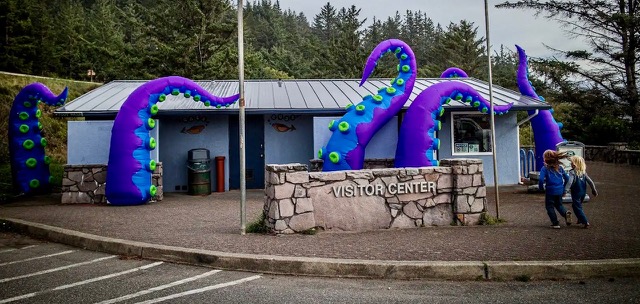
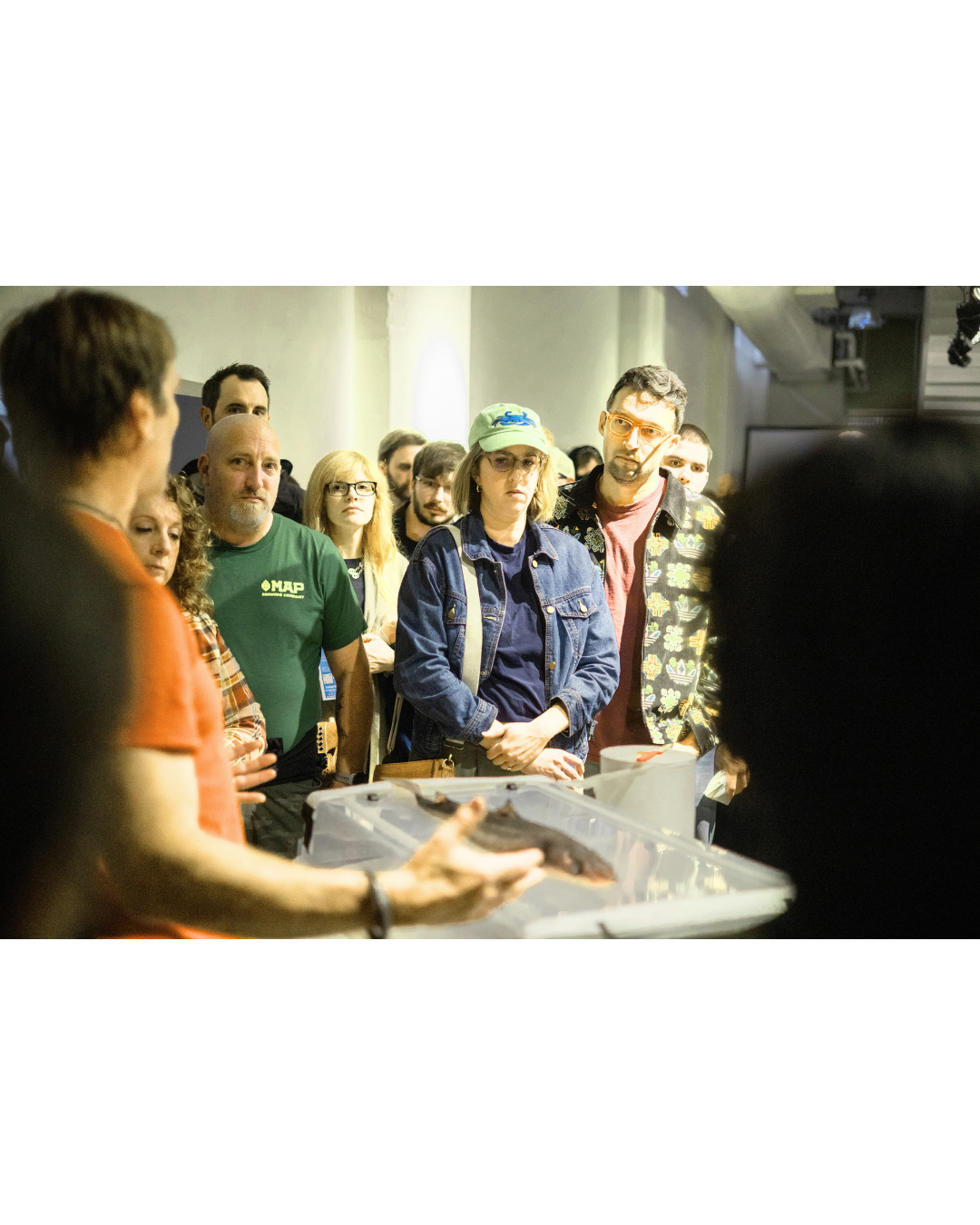
There is something deeply Oregon about spending more than a decade building an electrical outlet for the Pacific Ocean and then opening it with nothing plugged in.
That is PacWave South.
And yes, I am oversimplifying one of the most sophisticated marine-energy research sites in the country.
But I am doing it because the outlet metaphor is the first thing that finally made the whole project make sense in my head.
Oregon State University built four offshore test berths near Newport, connected them back to shore with subsea cables, tied the whole thing into the electrical grid and created a place where developers can eventually drop full-scale wave-energy machines into the actual Pacific and find out whether their beautiful engineering survives contact with Oregon.
At the time I reported this, the site was fully operational.
No wave-energy devices were deployed yet.
I love that detail so much.
THE SOCKET WAS READY BEFORE THE APPLIANCE
PacWave director Dan Hellin confirmed the site was operational and still waiting for its first wave-energy converters.
That sounds anticlimactic until you understand what the hard part was.
The cables. The grid connection. The offshore infrastructure. The permits. The environmental monitoring. The years of work required so every new developer does not have to reinvent an ocean test site from scratch.
PacWave finished the stage before the band arrived.
“PacWave is now operational.” — Dan Hellin, Director of PacWave
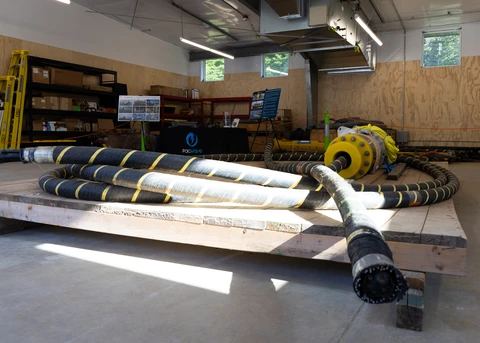
Photo: Oregon State University.
AND THE EMPTY CABLES ARE ALREADY DOING SCIENCE
This is the part that made me stop treating “no devices yet” like an empty room.
PacWave can already collect baseline environmental data, monitor marine life and use the infrastructure itself for research.
Hellin told us OSU researchers are exploring distributed acoustic sensing—using the fiber-optic elements inside the subsea cables as thousands of virtual sensors.
Thousands.
A cable lying under the ocean floor can become an enormous listening instrument for vibration, ocean conditions and potentially marine activity.
That is where marine engineering starts sounding like somebody wrote science fiction with a grant budget.
THEN THE OCEAN GETS TO JUDGE EVERYBODY
Eventually developers will put full-scale machines into the water.
Those devices will be able to generate electricity, send it back to shore through PacWave’s cables and produce the data everybody needs before wave power can become something larger than a promising diagram.
Performance. Reliability. Power quality. Environmental interaction.
And, most importantly, whether the machine keeps being a machine after the Pacific spends a winter trying to turn it into expensive confetti.
The ocean is a very honest reviewer.
It does not care about your pitch deck.
WHY NEWPORT IS THE RIGHT PLACE FOR THIS
The Oregon Coast is beautiful because it is powerful.
That same power is exactly what makes wave energy hard.
Salt. Storms. Variable swell. Corrosion. Force arriving from directions your prototype may have preferred not to discuss.
A calm laboratory can tell you whether something should work.
Newport can tell you whether it does.
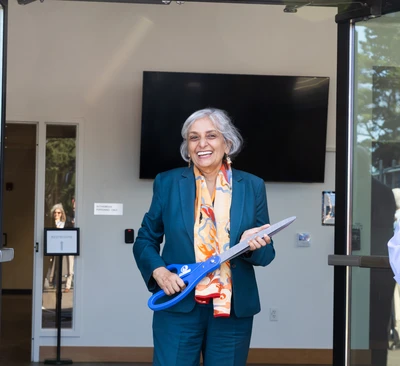
Photo: Darryl Lai / Oregon State University.
THE PART I WANT NORMAL PEOPLE TO KEEP
PacWave was not a wave farm quietly powering homes when I reported it.
It was infrastructure.
And infrastructure is difficult to make sexy until you imagine what happens without it.
Every company gets its own permits. Every experiment builds its own connection. Every team spends years solving the same access problem before it can even test the machine it came to test.
PacWave built the common doorway.
Now the interesting things get to walk through.
Maybe one of them works.
Maybe several fail spectacularly.
Either way, Oregon built a place where the ocean gets to answer the question instead of a PowerPoint.
That feels useful enough to me.
Last verified August 28, 2026 via PacWave Director Dan Hellin. Deployment timelines can change as projects progress.
Sources: Dan Hellin / PacWave direct reporting with PNW Passport; Michelle Klampe / Oregon State University media relations; OSU PacWave materials.